"Exploring Airstrip One: A Journey into Orwell's Nineteen Eighty-Four"
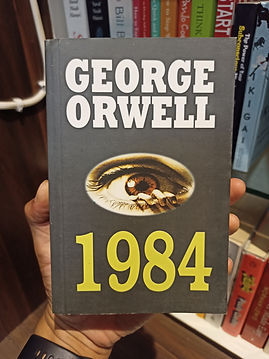
"Nineteen Eighty-Four" is a dystopian novel by George Orwell. It explores a totalitarian state, Oceania, where the Party led by Big Brother, controls every aspect of life. The story follows Winston Smith, a minor Party member who has a secret hatred for Big Brother and the Party. Winston divulges in acts of rebellion against the regime such as a secret relationship with Julia to try and seek the truth. Winston and Julia rent a room but are betrayed, arrested and tortured by the Party. In Room 101, Winston experiences psychological torture and is brainwashed into loving Big Brother. Essentially, the novel is a warning about totalitarian regimes that limit freedom and thought.
---
Now lets dive deeper into 1984!
INTRODUCTION:

Title: Nineteen Eighty-Four
Author: George Orwell
Publication Date: 1949
Genre: Dystopian, Science and Political Fiction
Setting:
Time: Takes place in 1984
Place: Fictional superstate of Oceania. Main events in the novel takes place in Airstrip One
Key Locations: Victory Mansions, Ministry of Truth, Love, Plenty and Peace, Room 101, Charrington's Shop and Chestnut Tree Cafe
Character Breakdown:

Winston Smith:
Protagonist
Potential Anti-Hero
A disillusioned Party member who seeks to find the truth and individuality
Julia:
Winston's love interest
Party member
Rebels against the Party with her secret relationship with Winston
O'Brien:
High ranking Party Official in the Inner Party
Betrays Winston
He represents the Party's control and oppression
Big Brother:
The face of the Party
Never seen in the novel
Omnipresent, all-knowing figure
Symbolises totalitarian control
"BIG BROTHER IS WATCHING YOU!"
Goldstein:
Leader of the opposition: The Brotherhood
Most likely a scapegoat used by the Party to justify their control
Mr Charrington:
The owner of the antique shop where Julia and Winston meet
Seems sympathetic at first to Winston and Julia
Revealed to be a Member of the Thought Police
Themes:

Here is a list of main themes:
Totalitarianism
Surveillance and Privacy
Language and Thought Control
The Individual vs The Collective
Rebellion and Resistance
Now let's take a closer look at each...
Theme: Totalitarianism
Definition: Totalitarianism is where the state has absolute control and power over all aspects of private and public life.
Main points:
Absolute Power
Surveillance
Loss of Individuality
Manipulation of Truth and Language
Examples in the text:
Telescreens: Two-way video devices that function as surveillance
Thought Police: Secret police that monitor and punish citizens thoughts and beliefs that go against the Party
Big Brother: The Party's leader who symbolises a totalitarian force
Ministry of Truth and Love: Ministries provide irony as their names Truth and Love do the opposite actions of their names
Important Quotes:
"War is Peace. Freedom is slavery. Ignorance is strength"
"BIG BROTHER IS WATCHING YOU"
"Who controls the past controls the future. Who controls the present controls the past."
Theme: Surveillance and Privacy
Definition: In 1984, Surveillance refers to the constant monitoring of every citizen by the Party through technological and psychological devices to instil fear and control.

Main Points:
Technological devices
Self-censorship
Psychological Control
Controlling Information
Examples in the text:
Big Brother: The omnipresent leader portrays the idea of constant watching
Telescreens: These screens monitor citizens and transmit Party propaganda
Thought Police: Enforce Party loyalty through threat
Important Quotes:
"But there was no way of shutting it off completely"
Thought Police: "but sooner or later they were bound to get you"
"It was almost normal for people over thirty to be frightened of their own children"
Theme: Language and Thought Control
Definition: The theme of Language and Control explores the limit of thoughts and manipulation of language serving as a tool for societal control.
Main Points:
Restrict Language
Manipulation of Slogans
Control of Thought
Revision of History
Examples in the text:
Newspeak: Official language of Oceania, simplifies language and restricts thought.
Thoughtcrime: The Party punishes even the slightest dissent of thought.
Doublethink: Citizens are forced to accept two contradictory statements as true; even if it conflicts with their own beliefs (e.g. 2+2=5).
Important Quotes:
"Don't you see that the whole aim of Newspeak is to narrow the range of thought?"
"But if thought corrupts language, language can also corrupt thought"
"In the end the Party would announce that two and two made five, and you would have to believe it"
Theme: The Individual vs The Collective
Definition: The theme of The Individual vs The Collective explores the tension between the need for personal freedom and the Party's desire for totalitarian control.
Main Points:
Suppression of the Individual
Personal Relationships
Collective Organisations for The Party
Examples in the text:
Junior Anti-Sex League: An organisation that promotes celibacy and discourages sexual relationships to prevent personal relationships.
The Role of The Proles: A working-class population who represent a potential threat of individuality and rebellion but are ignored by the Party as they do not pose a threat.
The Junior Spies: A youth organisation where children monitor adults for signs of disloyalty against the Party. Reflect the Hitler Youth Party (Contextual).
Important Quotes:
"If you want to keep a secret, you must also hide it from yourself"
"If there was hope, it must lie in the proles"
Theme: Rebellion and Resistance
Definition: The theme of Rebellion and Resistance engages in the struggle against oppressive control and the desire for freedom.
Main Points:
Individual Acts of Rebellion
The Desire for Truth
Harsh Reality of Rebellion
Examples in the text:
Winston's Diary: Winston keeps a diary where he writes down his thoughts and feelings, which is an act of defiance.
Julia and Winston's Secret Relationship: Defies The Party's ban and prohibition on personal connections.
Room 101: It is used to break the spirits of the prisoners, forcing them to confront their deepest fears e.g. Winston and the rats.
Important Quotes:
"DOWN WITH BIG BROTHER"
"The sexual act, successfully performed, was rebellion"
"He loved Big Brother"
Literary Devices:

Here is a list of Literary Devices used in "Nineteen Eighty-Four"
Stream of Consciousness
Imagery
Allusion
Symbolism
Foreshadowing
Irony
Satire
Structure and Form:
Structure:
Three-part Structure
First Part: Establishes the world of Oceania, introduces key characters and explores the daily life under the regime.
Second Part: Winston begins to develop a sense of individuality and a sense of hope. He establishes a secret relationship with Julia. This section produces tension as their desire for freedom clashes with the Party's control.
Third Part: Hope is lost. Winston is arrested and tortured in Room 101 by the Party and in particular O'Brien. The novel ends with Winston's acceptance of Big Brother.
Linear Structure
Chronological progression
Reader's can witness Winston's journey of rebellion into submission
Form:
Third Person Limited
Told from Winston's perspective to show his thoughts and feelings
Stream of consciousness
Orwell delves into Winston's inner thoughts which enhances the psychological depth of the character
Practice Questions:
How does George Orwell portray totalitarianism in the novel?
What is the significance of Winston's diary? How does it reflect his rebellion against The Party?
Explain the importance of Room 101 in the novel?
Discuss the symbolism of Big Brother? What does he represent?
What role do The Proles play in the narrative?
Identify and analyse the use of irony in 1984?
How does Orwell use foreshadowing to build tension in the novel?
What are the consequences of rebellion in the text?
Analyse the quote: "War is Peace. Freedom is Slavery, Ignorance is Strength". What does it reveal about The Party's control?
What does the glass paperweight symbolise?
Additional Critical Commentary to Read/Watch:
"'Do it to Julia'": Thoughts on Orwell's "1984"" by James Connors
"The Dynamics of Terror in Orwell's "1984"" by Malcolm Thorp
"Discipline and Punishment" by Michel Foucault
"1984" (Film)
Now, create your own mind map of themes, characters or motifs....

(Image created on Canva)


Comments